
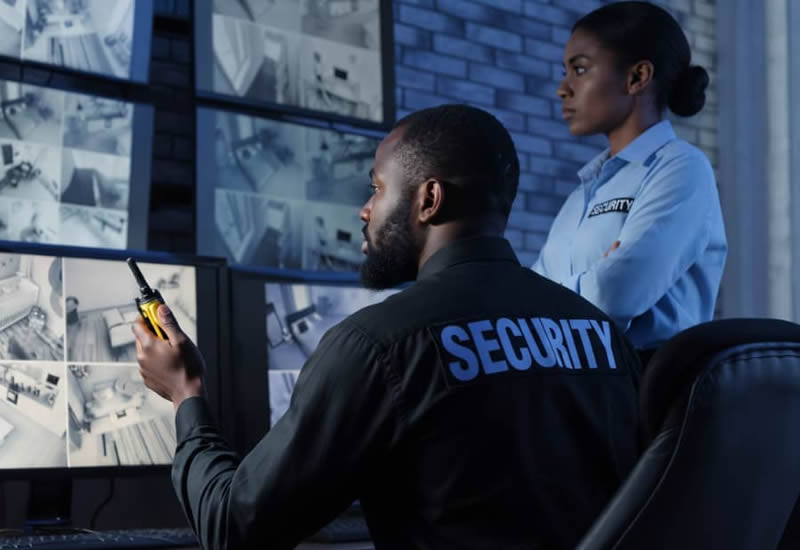
Why the future of security management requires more than operational experience, physical protection and the ability to respond to threats.
The role of a security manager has changed considerably. In the past, security management was largely associated with guarding premises, supervising personnel, controlling access and responding to incidents. While these responsibilities remain important, modern organisations now operate in environments where physical threats, digital vulnerabilities, human behaviour, regulatory obligations and business operations are closely connected. A security manager who understands only traditional protective duties may struggle to provide the level of security leadership that today’s organisations require.
Consider a manufacturing company with sophisticated surveillance cameras, trained security officers and a well-protected perimeter. Despite these investments, the company experiences repeated operational disruptions because contractors are not properly screened, access permissions are poorly managed and employees do not follow established procedures. The problem is not necessarily inadequate security equipment. It is the absence of an integrated approach to managing security risks. This illustrates an important principle: modern security management is not simply about preventing unauthorised access. It is about protecting the conditions that allow an organisation to operate safely, confidently and continuously.
Professional security management therefore requires a combination of operational knowledge, technological awareness, business understanding and leadership competence. The following ten skills are particularly important for anyone seeking to remain relevant and effective in today’s security environment.
1. The Ability to Understand Risk Before Managing Threats
One of the most important differences between a security supervisor and a strategic security manager is the ability to recognise that not every threat deserves the same response. An experienced supervisor may identify an exposed entrance, a suspicious visitor or an inadequate patrol arrangement. A competent security manager must go further by determining the likelihood of an incident, its potential consequences, the organisation’s existing controls and the most appropriate response.
Risk management requires understanding what the organisation values, what could go wrong and how much disruption it can reasonably tolerate. For example, the security requirements of a hospital differ significantly from those of a warehouse. In a hospital, restricting movement too aggressively could delay patient care, while in a warehouse, unrestricted movement could increase theft and inventory losses. Effective security management requires balancing protection with operational realities.
This is consistent with the Enterprise Security Risk Management approach promoted by ASIS International, which encourages security professionals to work with asset owners to identify, prioritise and manage risks in line with organisational objectives.
The modern security manager must therefore learn to assess risks systematically rather than rely entirely on previous experiences or personal assumptions.
2. Business Intelligence and Commercial Awareness
Security is often regarded as an operational expense because its value is not always immediately visible in financial statements. However, effective security contributes to business continuity, customer confidence, asset protection, regulatory compliance and operational efficiency. A manager who understands these connections is better positioned to influence organisational decisions.
Imagine a security manager requesting additional surveillance equipment costing several million naira. Management may be reluctant to approve the expenditure if the justification is simply that the existing equipment is outdated. However, the discussion becomes more meaningful when the manager demonstrates how repeated inventory losses, production interruptions and investigative delays are affecting profitability.
Commercial awareness also means understanding budgets, procurement procedures, service-level agreements, contractual obligations and performance indicators. The manager should be able to distinguish between expenditure that creates measurable value and expenditure that merely gives the appearance of improved protection.
The deeper lesson is that security managers must learn to speak the language of business, not only the language of threats. They should be able to explain what the organisation stands to lose, what protection will cost and how proposed investments support business priorities.
3. Security Technology and Systems Integration
Modern security technology extends far beyond CCTV cameras and conventional alarm systems. Organisations increasingly use networked video surveillance, electronic access control, biometric authentication, visitor management platforms, intrusion detection systems, automated alerts and integrated command centres.
Understanding these technologies does not necessarily mean becoming a systems engineer. However, a security manager should understand what each system does, its limitations, how it integrates with other systems and what is required to maintain its effectiveness.
For example, a company may install high-resolution cameras throughout its premises but neglect storage capacity, recording retention, network reliability and maintenance. The cameras may appear to be functioning normally, yet crucial footage could be unavailable when an incident occurs. Similarly, an access control system becomes less effective when former employees retain active credentials or security personnel routinely bypass established procedures.
The real value of security technology is not determined by how sophisticated it appears, but by how effectively it supports prevention, detection, response and investigation. Security managers must therefore develop the ability to evaluate technology based on operational requirements rather than purchasing decisions influenced primarily by product features.
4. Cybersecurity Awareness and the Convergence of Physical and Digital Security
The traditional separation between physical security and cybersecurity is becoming less practical. Many physical security systems now depend on computer networks, software applications, remote connections and digital databases. Consequently, a weakness in information security can directly affect physical protection.
Consider an electronic access control system connected to an organisation’s network. If its administrator credentials are compromised, an unauthorised person may be able to manipulate access permissions without physically approaching the facility. Similarly, poorly secured surveillance equipment can expose sensitive footage or create additional points of vulnerability within a network.
A modern security manager should understand basic cybersecurity concepts such as password security, access privileges, phishing, network-connected devices, data protection and incident escalation. The manager must also understand when to involve information technology and cybersecurity specialists.
The NIST Cybersecurity Framework 2.0 identifies six interconnected functions: Govern, Identify, Protect, Detect, Respond and Recover. Although developed for cybersecurity risk management, this framework offers a useful perspective on the importance of governance, preparedness and recovery in managing technology-related threats.
Physical security managers do not need to replace cybersecurity professionals. They need sufficient knowledge to recognise shared vulnerabilities and work effectively with the teams responsible for protecting digital systems.
5. Understanding Human Behaviour and Insider Risk
One of the most overlooked aspects of security management is the influence of human behaviour. Organisations may invest heavily in physical barriers and electronic systems while paying insufficient attention to employee conduct, workplace relationships, organisational culture and procedural weaknesses.
Not every security incident begins with criminal intent. Some result from carelessness, misunderstanding, excessive familiarity or pressure to complete work quickly. An employee may share an access card with a colleague, a receptionist may allow an unverified visitor inside to avoid appearing rude, or a contractor may disregard safety procedures because previous violations attracted no consequences.
A skilled security manager understands that rules alone do not guarantee compliance. People must understand why the rules exist, and systems must make responsible behaviour practical.
This requires competence in security awareness, behavioural observation, personnel screening, professional communication and the fair management of suspected insider threats. It also requires respect for employee dignity, privacy and due process.
Perhaps the most important insight is that security culture is demonstrated by what people do when nobody is watching. A security manager who develops responsible habits across the organisation may prevent incidents that surveillance equipment alone would never stop.
6. Crisis Management and Business Continuity
Responding effectively to an incident is important, but maintaining essential operations during and after a disruption is equally valuable. Modern security managers must understand how emergencies affect people, infrastructure, information, supply chains and organisational reputation.
Consider a corporate headquarters affected by a major fire, prolonged power failure or violent incident nearby. The immediate responsibility may involve evacuation, emergency coordination and securing the premises. However, the organisation must also determine how critical activities will continue, where employees will work and how essential services will be restored.
This is where crisis management and business continuity become closely connected. A security manager should understand emergency response procedures, incident command arrangements, evacuation planning, communication protocols, business continuity plans and recovery priorities.
Effective preparation includes realistic exercises, clear responsibilities and coordination with relevant emergency services. Plans should be reviewed whenever facilities, operations or threat conditions change.
The defining question is no longer simply, “Can we stop this incident?” It is also, “If this incident occurs despite our precautions, can the organisation continue functioning?”
7. Intelligence Gathering, Analysis and Situational Awareness
Security management becomes more effective when decisions are informed by credible information rather than rumours, assumptions or reactions to events that have already occurred.
Security intelligence involves collecting, evaluating and interpreting relevant information to identify emerging risks. This may include local crime patterns, changes in the operating environment, security incidents within an organisation, credible public safety alerts and developments that could affect business operations.
For example, a logistics company operating across several locations may need to understand recurring cargo theft patterns, transport disruptions, civil disturbances and vulnerabilities along its delivery routes. The purpose is not to predict every incident with certainty. It is to identify meaningful indicators and make better-informed decisions.
A modern security manager should therefore develop analytical thinking, information verification, structured reporting and sound judgement. Information must also be gathered lawfully and ethically, with appropriate regard for privacy and confidentiality.
Importantly, intelligence is not the same as accumulating reports. A manager who receives numerous incident reports but cannot identify recurring patterns may possess information without gaining useful insight.
The real value of intelligence lies in turning information into decisions that reduce exposure to risk.
8. Leadership, Communication and Stakeholder Management
Security leadership involves managing people whose responsibilities, priorities and professional backgrounds may differ considerably. Security personnel may focus on access control and patrol duties, while human resources professionals consider employee welfare, finance teams examine costs and senior executives prioritise organisational performance.
The security manager must be able to work effectively across these different interests. This requires clear communication, negotiation, conflict resolution, team development and the ability to influence decisions without relying solely on authority.
For instance, implementing a new visitor management procedure may require cooperation from reception staff, facility managers, human resources, information technology and departmental heads. Even a technically sound procedure may fail if those responsible for implementing it do not understand its purpose or practical requirements.
Leadership also involves setting professional standards, evaluating performance, mentoring officers and addressing misconduct fairly. A security manager who creates a culture of intimidation may achieve temporary compliance but discourage employees from reporting mistakes, vulnerabilities or emerging concerns.
Good security leadership should create an environment where personnel understand their responsibilities, exercise appropriate judgement and communicate problems early.
A manager’s effectiveness is therefore not measured only by how well instructions are issued, but by how consistently people make sound decisions when direct supervision is absent.
9. Security Governance, Legal Awareness and Professional Ethics
Security responsibilities must operate within clearly defined legal, ethical and organisational boundaries. Having the responsibility to protect people and property does not automatically grant unrestricted authority to search, detain, investigate, monitor or disclose information.
Modern security managers must understand the laws, regulations, contractual obligations and internal policies relevant to their operating environment. These may include employment requirements, privacy and data protection obligations, health and safety procedures, evidence preservation, licensing requirements and lawful cooperation with public security agencies.
For example, the availability of CCTV footage does not mean it should be shared freely. Footage may contain personal information, sensitive operational details or material relevant to an investigation. Its collection, access, retention and disclosure must be handled appropriately.
This is particularly important for professionals transitioning from government security services into corporate environments. Authority, operational procedures and accountability structures may differ significantly. Methods appropriate within one institutional framework may be unsuitable or unlawful in another.
A competent security manager must therefore understand not only what can be done operationally, but what is permitted legally and justified ethically.
Professional credibility depends on maintaining this distinction.
10. Performance Measurement, Reporting and Continuous Improvement
An organisation may employ hundreds of security personnel and operate numerous security systems without knowing whether its protection arrangements are genuinely effective. Modern security management must therefore move beyond measuring activity towards evaluating outcomes.
Traditional reports frequently concentrate on the number of patrols conducted, visitors registered, incidents recorded or officers deployed. While these figures have value, they do not necessarily demonstrate improved security performance.
For example, completing twenty patrols does not automatically mean a facility is safer. More useful questions include whether critical vulnerabilities were identified, whether reported defects were corrected, whether incidents were handled within required response times and whether repeated failures have declined.
A security manager should understand how to establish meaningful performance indicators, conduct operational reviews, analyse incident trends, audit procedures and recommend improvements. This also involves writing clear management reports that explain findings, consequences, corrective actions and outstanding risks.
Continuous improvement requires the willingness to examine failures without automatically treating every incident as evidence of individual incompetence. Sometimes the underlying problem is inadequate training, poorly designed procedures, unreliable technology or unclear responsibility.
The ability to recognise these weaknesses and improve the system distinguishes a learning security organisation from one that repeatedly experiences the same problems.
The Changing Definition of a Competent Security Manager
The modern security profession is moving towards a broader understanding of protection, one that connects physical security with business strategy, technology, human behaviour, governance and organisational resilience. This broader competency model is reflected in the ASIS Foundation’s Enterprise Security Competency Model, which includes risk management, cyber and information security, crisis management, governance, communication, critical thinking and business competence.
For experienced security professionals, particularly those transitioning from military, police or other government security services, this development presents both a challenge and an opportunity. Their operational experience, discipline, command skills and exposure to complex security situations provide a valuable foundation. However, success in corporate security requires translating that experience into a business environment where commercial priorities, organisational relationships, customer expectations, regulatory requirements and technology play significant roles.
An officer who once commanded a large security formation may now be required to prepare a business case for a security investment, negotiate with service providers, analyse operational risk, present findings to executives or coordinate a response involving several corporate departments. These responsibilities demand additional knowledge without diminishing the value of previous service.
This is why professional development must remain a continuous responsibility. Experience provides practical understanding, but continuous learning ensures that experience remains relevant.
Conclusion: The Future Belongs to Security Managers Who Understand the Bigger Picture
The most valuable security manager is not necessarily the person who has supervised the largest number of officers, managed the most sophisticated equipment or responded to the greatest number of incidents. It is the professional who understands how security decisions affect people, business operations, organisational confidence and long-term sustainability.
Modern security management requires the ability to anticipate risks, interpret information, manage resources, influence behaviour, understand technology and provide leadership when circumstances become uncertain.
The ultimate measure of security management is not how visible the security operation is, but how effectively it enables the organisation to function without unnecessary disruption.
As security challenges continue to evolve, professionals who invest in these ten competencies will be better prepared to move beyond traditional supervisory responsibilities into strategic leadership, corporate security management, risk advisory, security consulting and other specialised career opportunities.
For professionals preparing to make this transition, Veterans Opportunity to Work (VOW Nigeria) provides a platform for career assessment, professional training and development, and support towards opportunities within the modern security industry.
The future of security management will not be defined by experience alone. It will be shaped by professionals who know how to combine experience with knowledge, sound judgement and the capacity to adapt.